
Diagnostics
EMG and nerve conduction studies.
The test that shows whether a nerve is actually being damaged, which one, and how badly. Performed and read by Dr. Sheikh in all three offices.
- Read by
- Dr. Sheikh himself
- Results
- The same day
- Where
- In the office
In short
An EMG with nerve conduction studies is a test that measures how well your nerves carry signals and how your muscles respond. It is how we find out whether numbness, tingling, weakness or shooting pain is coming from a pinched nerve in your spine, a compressed nerve in your wrist or elbow, a neuropathy, or a muscle problem. The test takes thirty to sixty minutes, requires no sedation and no recovery time, and Dr. Sheikh reviews the results with you the same day.
Test length
30 to 60 minutes
Sedation
None
Results
Same day
What it is
Two tests, one sitting.
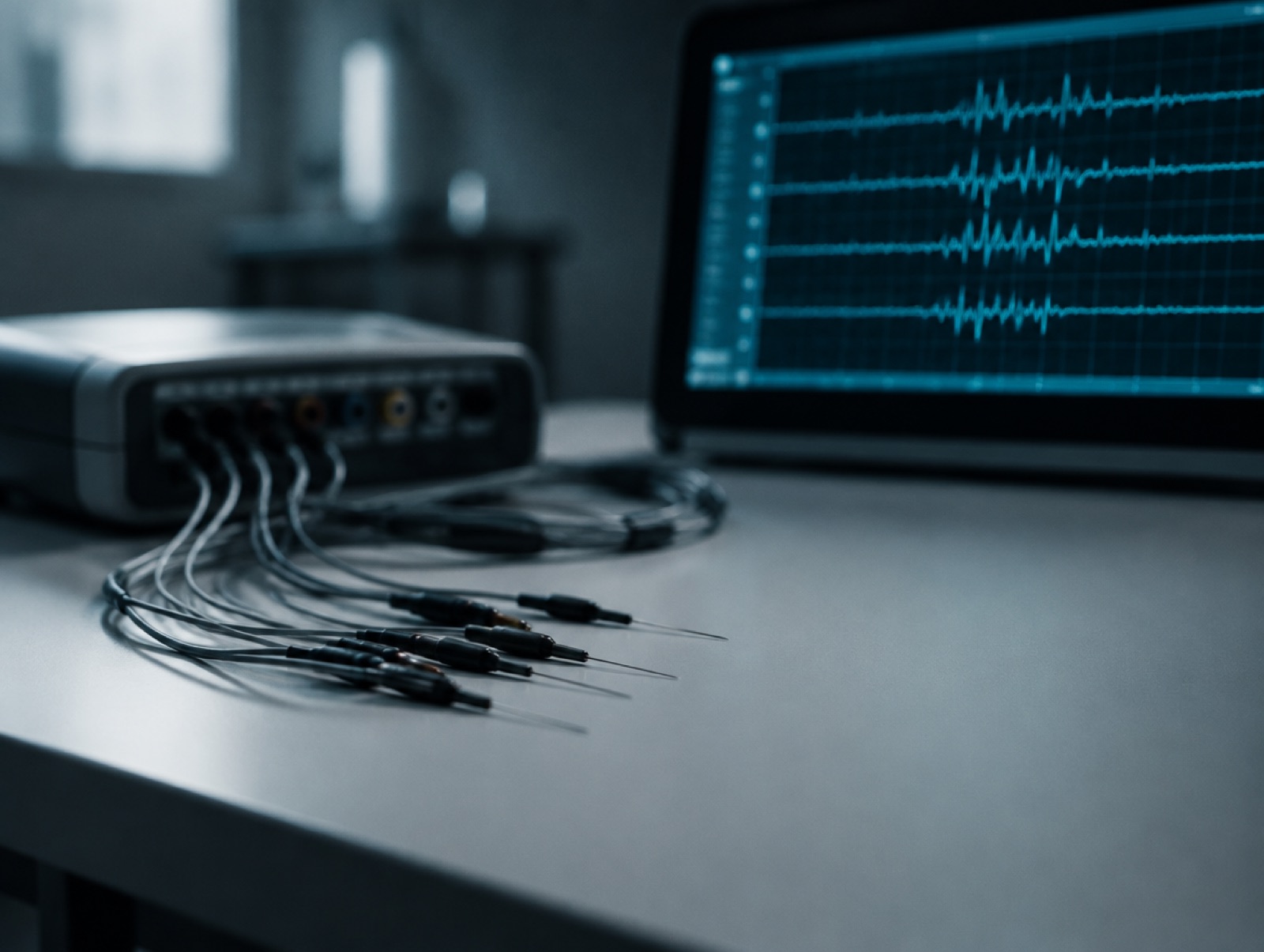
There are two parts, done in one sitting. The nerve conduction study places small electrode stickers on the skin and sends a brief pulse along a nerve, timing how fast the signal travels and how strong it arrives. A slow or weak signal shows where the nerve is being compressed or damaged. The needle EMG then places a very thin needle electrode into specific muscles and records their electrical activity at rest and while you contract them, because a muscle that has lost its nerve supply has a distinct electrical signature. Dr. Sheikh is board certified in pain management and performs and reads these studies himself. He is known locally as The Nerve Doc for that reason. An MRI shows anatomy, including findings that are not causing anything. An EMG shows function, which is what tells us whether the finding on the MRI is the one making your arm go numb.
Why it is ordered
What an EMG can find.
Numbness, tingling, weakness or shooting pain has a source. This is how the source is identified rather than guessed at.
- Carpal tunnel syndrome
- Cubital tunnel syndrome, meaning ulnar nerve compression at the elbow
- Cervical and lumbar radiculopathy, a pinched nerve root in the neck or low back
- Tarsal tunnel syndrome
- Sciatica, when the source of the leg pain is not clear
- Diabetic peripheral neuropathy
- Alcoholic neuropathy
- Chemotherapy induced neuropathy
- Idiopathic peripheral neuropathy
- Myopathy
- Muscular dystrophy
- Polymyositis
- Myasthenia gravis
- Guillain-Barre syndrome
- Chronic inflammatory demyelinating polyneuropathy (CIDP)
- ALS and other motor neuron disease
- Peripheral nerve injury after trauma or surgery
- Thoracic outlet syndrome
What to expect
Start to finish, with nothing left out.
Questions
EMG testing, answered.
Does an EMG hurt?
It is uncomfortable for a few seconds at a time, not painful in the way people fear. The nerve conduction pulses feel like a quick static shock. The needle feels like a pinch going in. Most patients say afterward that they had built it up into something much worse than it was.
How long does it take?
Thirty to sixty minutes, depending on how many nerves and muscles need to be tested. A single hand for suspected carpal tunnel is at the short end. Both legs for a neuropathy workup is at the long end.
Do I need to stop my medications?
Almost never. Keep taking what you take. Tell us if you are on a blood thinner such as warfarin, apixaban or clopidogrel, since we may adjust which muscles we test, but blood thinners do not usually cancel the test.
Can I have an EMG with a pacemaker or a defibrillator?
In most cases yes, with specific precautions about where we place the electrodes. Tell us before the test so we can plan it properly.
When do I get the results?
The same day. Dr. Sheikh reads the study himself and explains it to you before you leave the office.
Do I need a referral?
Some insurance plans require one and some do not. Call (888) 233-3415 with your insurance card in hand and the front desk will check while you are on the phone.
Is it covered by insurance?
EMG and nerve conduction studies are covered by most plans when there is a clinical reason for the test, and they are routinely covered on workers' compensation and auto injury claims. We verify your coverage before the appointment.
Why do I need an EMG if I already had an MRI?
They answer different questions. An MRI shows structure, and many people have disc bulges on an MRI that cause no symptoms at all. An EMG shows whether a nerve is actually being damaged and which one. Together they tell us where to treat.
Can I drive myself home?
Yes. There is no sedation and no restriction on activity afterward.
Find out which nerve it is.
EMG and nerve conduction studies in Clifton, Jersey City and Edison, read and explained the same day.