
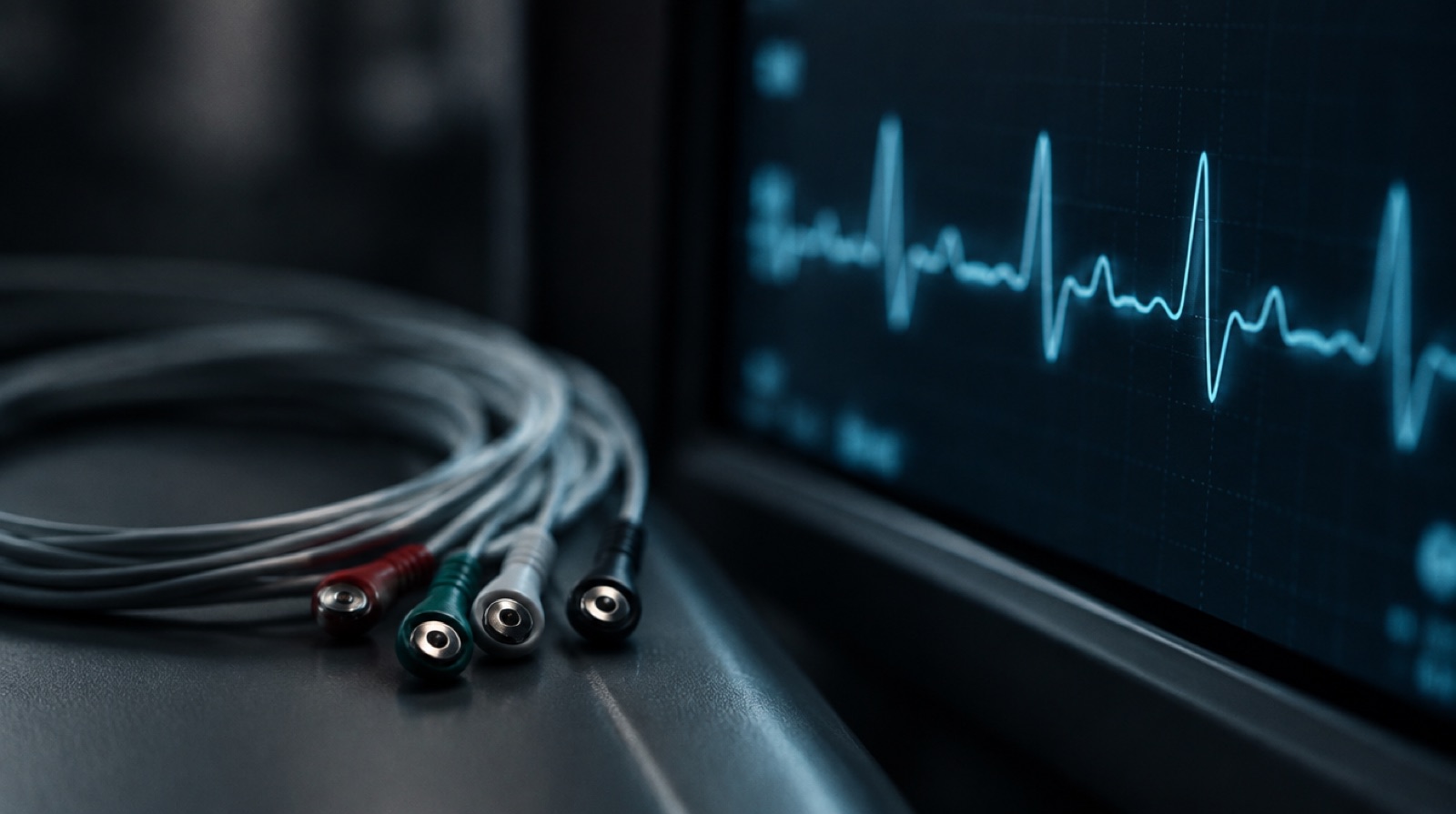
An EMG test has two parts and takes thirty to sixty minutes in total. First, small shocks are sent along your nerves through surface electrodes to measure how fast and how strongly they conduct. Then a thin needle is placed into a few muscles to listen to their electrical activity. Most patients describe it as uncomfortable rather than painful, and there is no recovery time afterward.
What the test is measuring
Electromyography, or EMG, and nerve conduction studies are usually performed together as one appointment. They measure electrical function, which is something no scan can do. An MRI shows you a picture of anatomy. It can show a disc pressing on a nerve root and tell you nothing about whether that nerve is working. The EMG answers the functional question: is this nerve conducting, how badly is it impaired, where along its course is the problem, and how long has it been going on.
That distinction decides treatment more often than patients expect. Plenty of people over fifty have disc bulges on MRI that cause no symptoms at all. If your hand is numb and the MRI shows a neck disc, the EMG is what tells you whether the neck is to blame or whether the real problem is carpal tunnel at the wrist. Those two conditions produce similar complaints and completely different treatments.
Conditions an EMG can identify
- Carpal tunnel syndrome, including how severe it is and whether surgery is warranted
- Cervical and lumbar radiculopathy, the nerve root irritation behind most neck pain and sciatica
- Peripheral neuropathy, including diabetic neuropathy and chemotherapy-related nerve damage
- Ulnar neuropathy at the elbow, a common cause of numbness in the ring and little fingers
- Nerve injury following trauma, a workplace accident or surgery
- Muscle disorders that weaken without causing numbness
How to prepare
Preparation is simple. Do not apply lotion, oil or cream to your skin on the day of the test, because they interfere with electrode contact. Wear loose clothing that lets your arms and legs be reached without changing into a gown. Bathe normally, since clean dry skin conducts best.
Keep taking your usual medications unless you have been told otherwise. Tell the office beforehand if you take a blood thinner, have a bleeding disorder, or have a pacemaker or an implanted defibrillator. None of these automatically rules out the test, but they change how it is performed. If you have lymphedema or an arm your surgeon has asked you to protect, say so.
Eat normally. Avoid caffeine on the morning of the test if you have been told you are being evaluated for a neuromuscular junction disorder, though this is uncommon.
Part one: the nerve conduction study
Adhesive electrode patches are placed on the skin over specific nerves and the muscles they supply. A small stimulator delivers a brief electrical pulse, and the equipment records how quickly the signal travels and how large it is when it arrives. Each pulse lasts a fraction of a second and feels like a static shock or a sharp tap. Your finger or foot may twitch. That is expected and means the nerve is responding.
The stimulation is repeated at several points along each nerve. Comparing the speed between two points is how the exact site of a compression is located. This part takes fifteen to thirty minutes depending on how many nerves are being checked. Nobody enjoys it, but the sensation stops the moment the pulse stops, and there is no lingering discomfort.
Part two: the needle examination
A very thin sterile needle electrode, thinner than the needle used to draw blood, is placed into selected muscles. It is a recording device, not an injection, so nothing is being put into you. The needle picks up the electrical chatter of the muscle at rest and then while you contract it gently. You will be asked to flex and relax on cue.
A healthy muscle at rest is electrically silent. A muscle whose nerve supply is damaged is not, and the pattern of that activity tells the physician whether the injury is recent or old, whether it is recovering, and which nerve root it maps to. You will feel a brief pinch on insertion and some ache when the muscle is being tested. Most patients rate it around a three out of ten. This part also takes fifteen to thirty minutes.
Getting your results
At NJ Pain & Spine the study is performed and interpreted by Dr. Ednan Sheikh, who is board certified in electrodiagnostic medicine, so the results are available the same day. You will not go home and wait a week for a phone call. The findings are explained before you leave, along with what they mean for treatment.
Results fall into three categories. They may confirm what was suspected, in which case the plan becomes concrete. They may show something unexpected, such as a generalized neuropathy in a patient who came in for one hand. Or they may be normal, which is genuinely useful information: it rules out nerve damage and redirects the search toward a joint, a tendon or a muscular cause.
A normal EMG is not a wasted appointment. Knowing the nerve is intact changes what we do next just as much as finding it damaged.
Afterward
There is no downtime. You can drive yourself home and return to work the same day. Some patients have mild soreness or small bruises where the needle was placed, which usually settles within a day or two. Ice helps if it bothers you. There are no restrictions on activity, eating or medication.
Based on the findings, the next step might be an epidural steroid injection for a confirmed radiculopathy, a wrist splint or surgical referral for carpal tunnel, metabolic workup for peripheral neuropathy, or a nerve block for a specific entrapped nerve.
Booking a test
EMG testing is available at the Clifton, Jersey City and Edison offices. A referral is not always required, though some plans ask for one, and the office will check your coverage before scheduling. If you have numbness, tingling, weakness or pain that shoots along a limb, this is the test that tells you why.