


Condition
Bursitis
A bursa is a thin fluid filled sac that lets a tendon glide over bone.
- Seen at
- All three offices
- Typical wait
- Within the same week
- Treated with
- 3 procedures
In short
What bursitis actually is.
Bursitis
A bursa is a thin fluid filled sac that lets a tendon glide over bone. Bursitis is inflammation of that sac, most often at the tip of the shoulder, the outside of the hip, the point of the elbow or the front of the knee. It produces pain you can put one finger on, worst when you press on it or load the tendon running across it. At the hip in particular, what gets labelled bursitis is very often a problem in the gluteal tendon itself, and that distinction changes what actually helps.
Symptoms
How it shows up.
If several of these sound like your week, it is worth having the source looked at properly.
- A sore point on the outside of the hip that hurts the moment you lie on that side
- Pain at the tip of the shoulder when you reach overhead or behind your back
- A soft swollen lump over the point of the elbow that came up over a day or two
- Pain at the front of the knee after kneeling on a hard floor
- Pain when you press directly on the spot, and relief the moment pressure comes off it
- Stiffness after sitting still that eases once you have moved for a few minutes
- Getting out of a car or climbing stairs sets the hip off for the rest of the day
What causes it
- Repeated pressure on the bursa from kneeling, leaning on an elbow or sleeping on one side
- Overload of the tendon that crosses the bursa, from a sudden increase in walking, running or overhead work
- Weakness in the hip abductor muscles, which lets the tendon compress against bone with every step
- A direct blow or a fall onto the shoulder, elbow or knee
- Arthritis or a rotator cuff problem in the neighboring joint changing how the tendon tracks
- Gout, rheumatoid arthritis or infection, which can inflame a bursa with no mechanical cause at all
When to act
Stop waiting when this happens.
Do not sit on these
Any one of the following is a reason to be seen rather than to wait it out.
- Pain has not settled after two or three weeks of rest, ice and activity changes
- You cannot sleep on that side, or the pain wakes you most nights
- The area is hot, red and swollen and you feel unwell or feverish, which needs same day care to rule out infection
- The limb is getting weaker rather than just sorer, or you have started limping
- The same spot has flared three times or more, which usually means the tendon and the mechanics behind it were never addressed
Diagnosis
Finding the actual source.
A diagnosis is not a guess from an image. It comes from the exam, the history and, where nerves are involved, electrodiagnostic testing.
- Pressing on the bursa itself to see whether that one point reproduces exactly the pain you came in with
- Resisted strength testing of the tendon crossing that bursa, since pain on resisted abduction at the hip points at the gluteal tendon rather than the sac
- A single leg stance test at the hip, which is one of the more reliable ways to separate tendon pathology from simple bursal inflammation
- Examining the joint above and below, because shoulder bursitis often sits on top of a rotator cuff problem and hip pain is frequently referred from the lumbar spine
- Ultrasound imaging of the bursa and the tendon underneath it, which changes the plan more often than people expect
- Testing the fluid for infection and crystals before any steroid is considered, whenever a bursa is hot and swollen rather than simply sore
Nerve testing happens here, not elsewhere
EMG and nerve conduction studies are done in the office and read by Dr. Sheikh the same day, rather than sent out and waited on.
Treatment
How bursitis is treated.
Ordered from the most common first step to the options reserved for pain that has not responded.
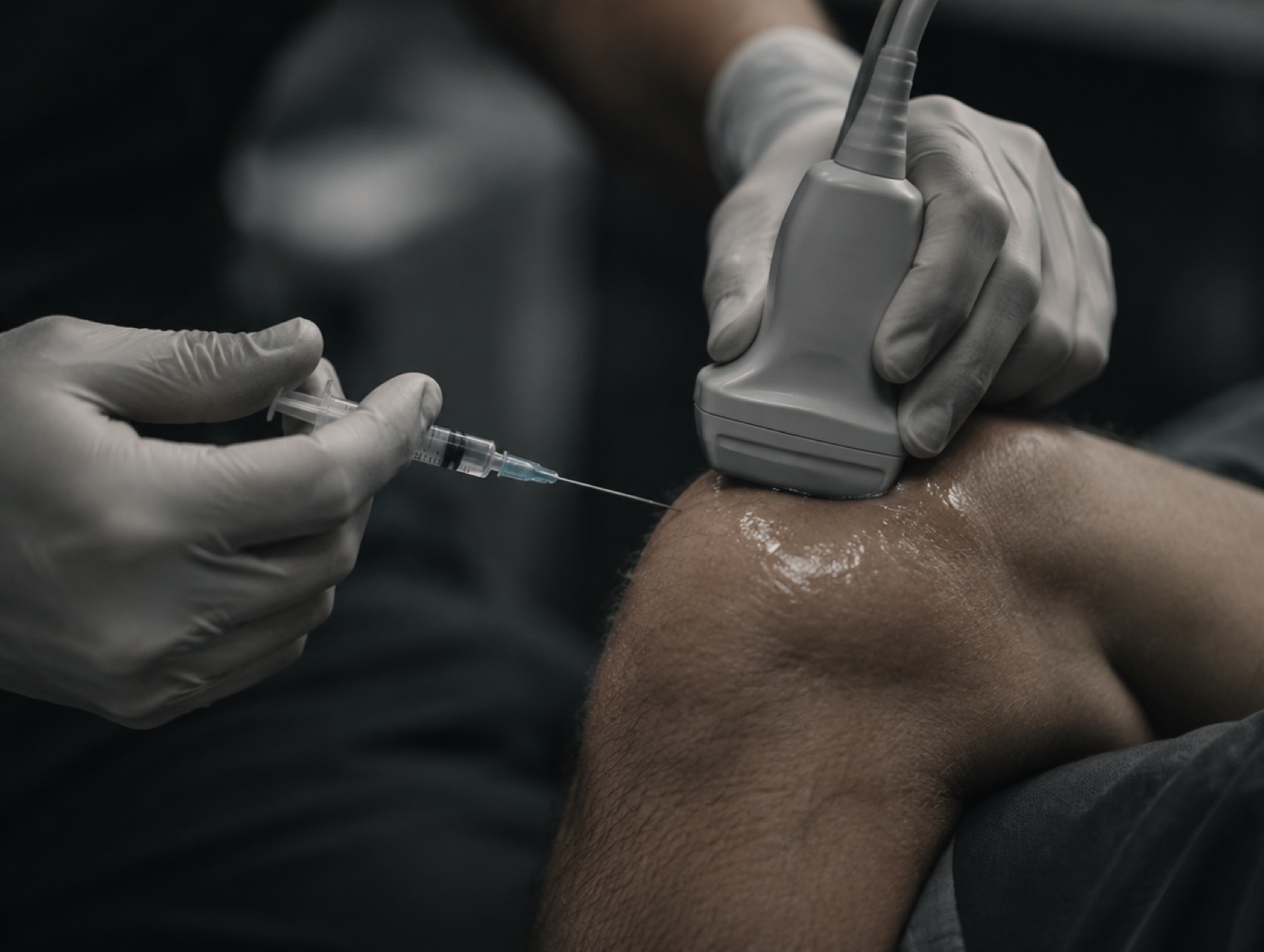 45 minJoint InjectionsA joint injection places medication directly into a painful joint, either a corticosteroid to reduce inflamma…Read more →
 45–60 minPRP TherapyPRP therapy concentrates the platelets from a sample of your own blood and injects them into an injured tendo…Read more →
 Trigger Point InjectionA trigger point injection treats a knot in a muscle, a tight band that will not release and that often refers…Read more →
Questions
Bursitis, answered.
Is my hip bursitis actually bursitis?
Often it is not. Pain over the point of the hip usually comes from the gluteal tendons where they attach to bone, with the bursa inflamed secondarily or not at all. This matters because a degenerative tendon responds to progressive loading and does poorly with repeated steroid, while a genuinely inflamed bursa settles quickly with an injection. Resisted testing and ultrasound are what separate the two.
Will a cortisone injection fix it?
For an inflamed bursa it often works well and quickly, and relief can last months. It works less reliably when the real problem is the tendon, where it may give a few good weeks and then fade. Dr. Sheikh will tell you which of those he thinks you have before injecting, because it changes what you should expect. Injection also works best when it buys you a window to strengthen what was overloading the area.
How long does bursitis take to settle?
A straightforward bursitis from a single episode of pressure or a knock often settles in two to six weeks. Hip and shoulder cases that have been building for months take longer, frequently three months or more, because the tendon involved remodels slowly. The ones that drag on are almost always the ones where the underlying load was never changed.
Can I keep exercising?
Yes, and you should, with modifications. Stop the specific movement that spikes the pain rather than stopping altogether. For the hip that usually means avoiding crossing your legs, standing hanging on one hip, and deep stretches that press the tendon against bone, all of which feel productive and make it worse. Strengthening the muscle around the tendon is the part that holds.
Should I sleep on the other side?
For hip bursitis, yes, and put a pillow between your knees so the top leg does not drop across your body and compress the tendon. For shoulder bursitis, sleeping slightly propped up with the arm supported on a pillow takes pressure off the joint. Small positional changes often produce more relief in the first week than anything else.
Get a real diagnosis for bursitis.
Three New Jersey offices, most insurance accepted, and a real opening on the calendar.