


Condition
Adhesive Capsulitis (Frozen Shoulder)
Adhesive capsulitis, usually called frozen shoulder, is inflammation and then thickening of the capsule that wraps the shoulder joint.
- Seen at
- All three offices
- Typical wait
- Within the same week
- Treated with
- 3 procedures
In short
What frozen shoulder actually is.
Adhesive Capsulitis (Frozen Shoulder)
Adhesive capsulitis, usually called frozen shoulder, is inflammation and then thickening of the capsule that wraps the shoulder joint. The capsule contracts and the shoulder loses motion in every direction, including when someone else moves the arm for you, which is what separates it from a rotator cuff problem. It runs through three phases: a painful freezing phase, a stiff frozen phase, and a slow thawing phase. It does resolve on its own, but that usually takes one to three years, and the point of treatment is to shorten the painful part of that.
Symptoms
How it shows up.
If several of these sound like your week, it is worth having the source looked at properly.
- Shoulder pain that started for no reason you can name and got worse over several weeks
- A deep ache in the shoulder that runs down toward the elbow
- Not being able to reach behind your back to fasten a bra or get a wallet out of a pocket
- Pain that is at its worst at night and stops you sleeping on that side
- The arm will not go up even when someone else lifts it for you
- Turning your whole body to reach a seatbelt, a shelf or the back seat
- A later stage where the pain has quieted down but the shoulder is still locked
What causes it
- Diabetes, which is the strongest association and tends to make the course longer and more stubborn
- Thyroid disease, both underactive and overactive
- A period of immobility after a fracture, surgery or a stroke affecting that arm
- A minor injury or a rotator cuff problem that made you stop using the arm normally
- No identifiable trigger at all, which is the case for a large share of patients
- A previous frozen shoulder, since the other shoulder carries a raised risk afterward
When to act
Stop waiting when this happens.
Do not sit on these
Any one of the following is a reason to be seen rather than to wait it out.
- Shoulder motion is dropping week by week rather than holding steady
- Night pain is stopping you sleeping, which is the symptom that tends to respond best to treatment
- You cannot reach overhead or behind your back for ordinary daily tasks
- You have diabetes and a stiffening shoulder, since these cases tend to be more severe and are worth treating early rather than watching
- You were told six months ago to wait it out and nothing has changed
Diagnosis
Finding the actual source.
A diagnosis is not a guess from an image. It comes from the exam, the history and, where nerves are involved, electrodiagnostic testing.
- Comparing active and passive range of motion, because a capsular problem restricts both while a rotator cuff tear restricts mainly what you can lift under your own power
- Measuring external rotation with the arm at your side, which is the motion lost earliest and is the most reliable single sign
- Establishing which phase you are in, since a hot painful freezing shoulder is managed differently from a quiet stiff one
- Checking blood sugar and thyroid function, because undiagnosed diabetes and thyroid disease turn up regularly in this group
- X-ray to rule out glenohumeral arthritis or an old unreduced dislocation, both of which can cause the same global loss of motion
- MRI only when the history suggests a coexisting rotator cuff tear, since imaging is not needed to make this diagnosis
Nerve testing happens here, not elsewhere
EMG and nerve conduction studies are done in the office and read by Dr. Sheikh the same day, rather than sent out and waited on.
Treatment
How frozen shoulder is treated.
Ordered from the most common first step to the options reserved for pain that has not responded.
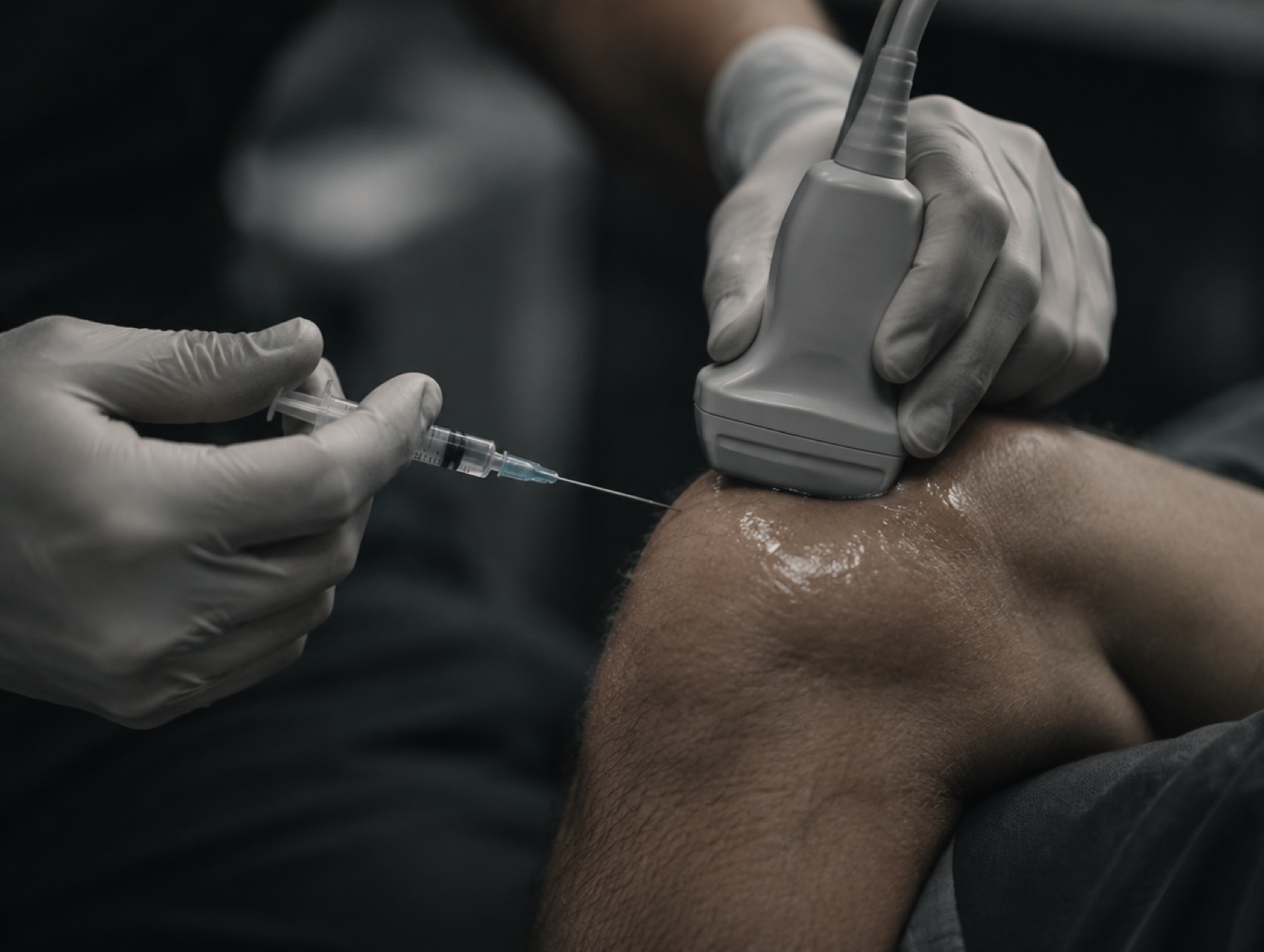 45 minJoint InjectionsA joint injection places medication directly into a painful joint, either a corticosteroid to reduce inflamma…Read more →
 15–45 minNerve BlockA nerve block is an injection of local anesthetic, often with a steroid, placed next to a specific nerve or c…Read more →
 Trigger Point InjectionA trigger point injection treats a knot in a muscle, a tight band that will not release and that often refers…Read more →
Questions
Adhesive Capsulitis (Frozen Shoulder), answered.
How long will this last?
Honestly, a long time. The freezing phase typically runs two to nine months, the frozen phase four to twelve, and thawing another five to twenty four. Most people are looking at one to three years from start to finish if nothing is done. Treatment does not skip phases, but it can meaningfully shorten the painful early part and reduce how much motion you lose along the way.
Will physical therapy help or make it worse?
It depends entirely on the phase. Aggressive stretching during the painful freezing phase inflames the capsule further and can set you back. Gentle range of motion within a comfortable limit is appropriate then, and more assertive stretching becomes useful once the pain has quieted in the frozen phase. Therapy timed to the wrong phase is one of the most common reasons people feel they are going backward.
Does an injection actually help?
An injection into the joint during the painful phase reduces capsular inflammation, and for many people it is what finally lets them sleep. It works best early, while inflammation is still driving the pain, and it does far less for a shoulder that is already stiff and no longer especially painful. It also opens a window where therapy can do its work instead of just hurting.
Why do people with diabetes get this?
Elevated blood sugar drives the formation of cross links in collagen, which makes the shoulder capsule stiffer and more prone to contracting. The link is strong and well established, and it applies to both type one and type two. Frozen shoulder in a diabetic patient tends to be more severe, last longer and respond more slowly, which is a reason to treat it early rather than wait.
Can it happen in the other shoulder?
It can, and it happens often enough to be worth knowing about. It usually occurs some time after the first shoulder rather than at the same time, and having had one does not mean you will get the other. The same shoulder recurring, on the other hand, is uncommon. If the second shoulder starts to stiffen, come in early, because early is when treatment does the most.
Get a real diagnosis for frozen shoulder.
Three New Jersey offices, most insurance accepted, and a real opening on the calendar.