


Condition
Runner's Knee (Patellofemoral Pain)
Runner's knee, or patellofemoral pain, is pain around or behind the kneecap caused by how the kneecap tracks and how much load passes through the joint behind it.
- Seen at
- All three offices
- Typical wait
- Within the same week
- Treated with
- 3 procedures
In short
What runner's knee actually is.
Runner's Knee (Patellofemoral Pain)
Runner's knee, or patellofemoral pain, is pain around or behind the kneecap caused by how the kneecap tracks and how much load passes through the joint behind it. It hurts going down stairs, squatting, and after sitting for a long time with the knee bent. The kneecap itself is usually not damaged. In most patients the real driver is weakness in the hip and gluteal muscles that lets the thigh roll inward on landing, which is why the fix is usually above the knee rather than at it.
Symptoms
How it shows up.
If several of these sound like your week, it is worth having the source looked at properly.
- A dull ache around or behind the kneecap that is hard to point to with one finger
- Pain going down stairs or downhill, usually worse than going up
- Aching after sitting a long time with the knee bent, which eases when you straighten it
- Pain when you squat, kneel or get out of a low chair
- Grinding or creaking behind the kneecap when the knee moves
- A knee that feels like it might buckle without actually giving way
- Little or no swelling, which is part of what separates it from a joint injury
What causes it
- Weak hip abductors and gluteal muscles, which let the thigh drop and rotate inward when you land
- Increasing running volume, hill work or squatting load faster than the joint adapts
- Tight quadriceps, hamstrings and iliotibial band pulling the kneecap out of its groove
- A kneecap that sits high or tracks toward the outside of its groove
- Long hours sitting with the knee bent, which is why office workers get it as well as runners
- Flat feet or heavy inward roll at the foot, which rotates the shin underneath the kneecap
When to act
Stop waiting when this happens.
Do not sit on these
Any one of the following is a reason to be seen rather than to wait it out.
- Pain has lasted more than six weeks despite backing off the activity that causes it
- The knee locks, catches or gives way, which suggests a meniscus or cartilage problem instead
- There is real swelling, which is not typical of patellofemoral pain
- The pain followed a fall directly onto the kneecap or a kneecap dislocation
- Pain is now present at rest or at night, which needs a different workup
Diagnosis
Finding the actual source.
A diagnosis is not a guess from an image. It comes from the exam, the history and, where nerves are involved, electrodiagnostic testing.
- A history built around what provokes it: stairs, hills, squatting, and how long you can sit before it aches
- Watching a single leg squat and a step down, where a knee that falls inward exposes the hip weakness driving most cases
- Testing hip abductor and gluteal strength directly, side to side, since that is usually where the deficit is
- Compressing and tracking the kneecap through its range and palpating its edges to reproduce the pain
- Examining the meniscus, ligaments and joint line to rule out the injuries that present similarly but are treated very differently
- Imaging only when the exam suggests something structural, since X-rays and MRIs of painless knees routinely show changes that mean nothing on their own
Nerve testing happens here, not elsewhere
EMG and nerve conduction studies are done in the office and read by Dr. Sheikh the same day, rather than sent out and waited on.
Treatment
How runner's knee is treated.
Ordered from the most common first step to the options reserved for pain that has not responded.
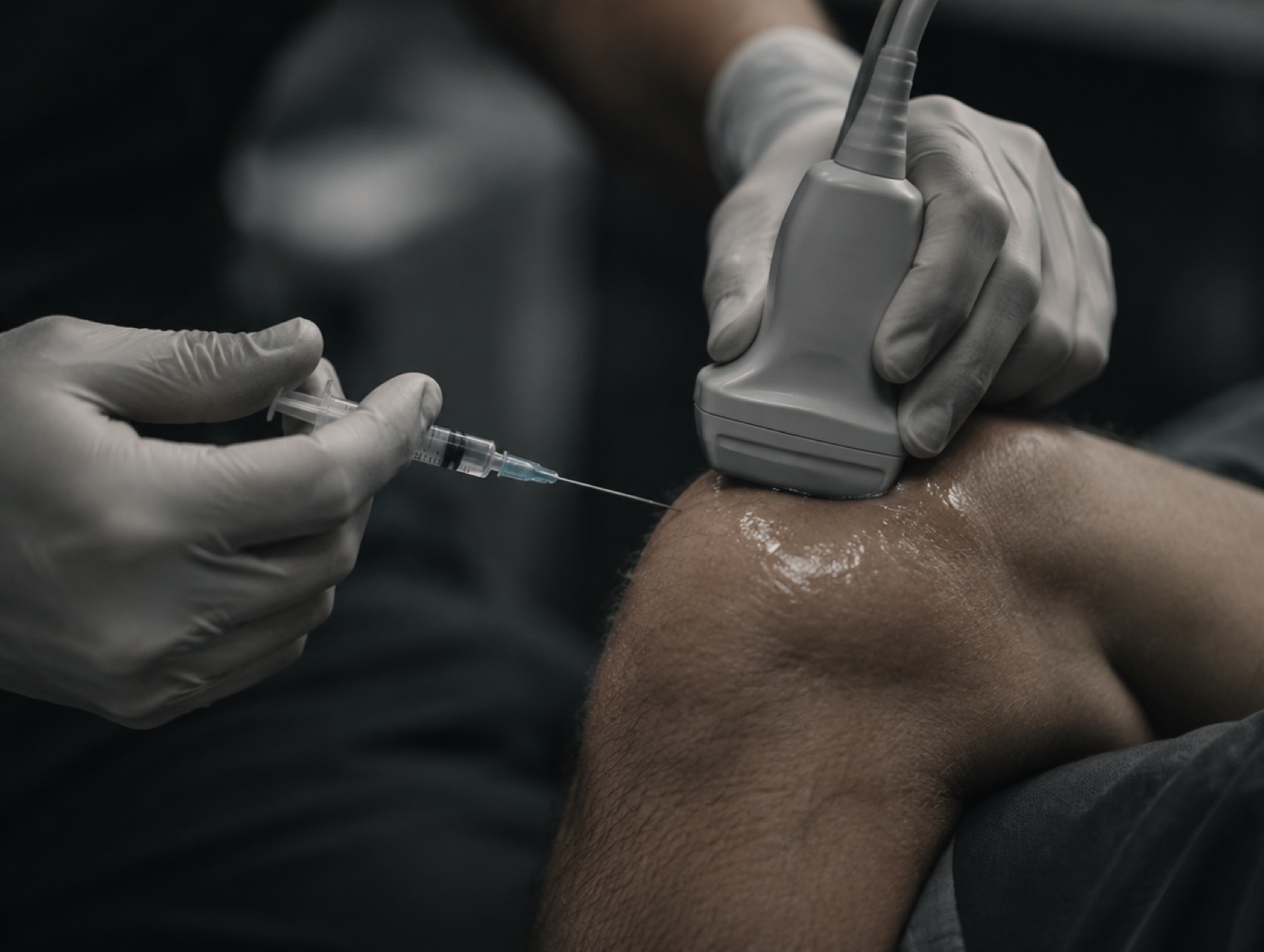 45 minJoint InjectionsA joint injection places medication directly into a painful joint, either a corticosteroid to reduce inflamma…Read more →
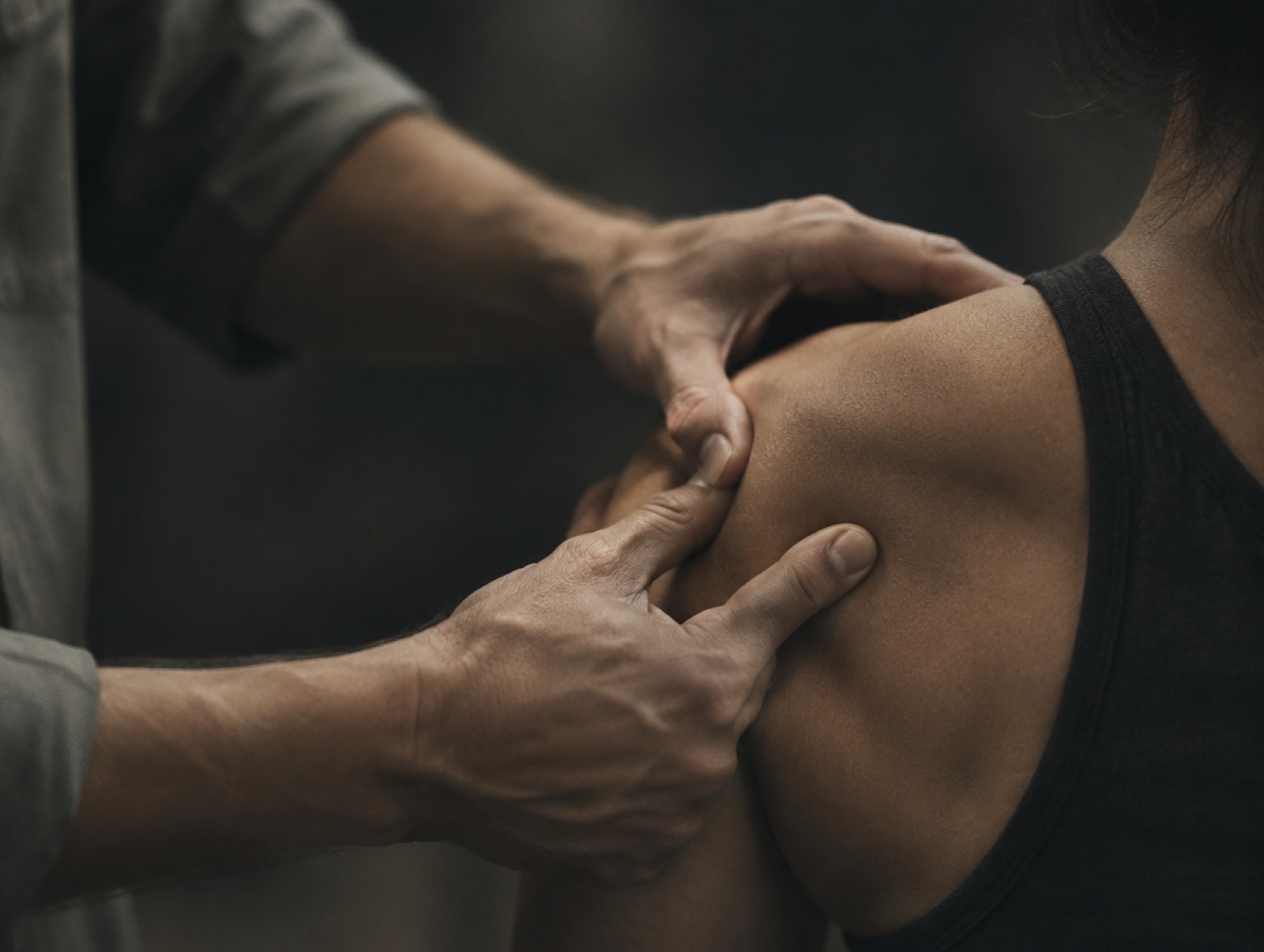 Trigger Point InjectionA trigger point injection treats a knot in a muscle, a tight band that will not release and that often refers…Read more →
 45–60 minPRP TherapyPRP therapy concentrates the platelets from a sample of your own blood and injects them into an injured tendo…Read more →
Questions
Runner's Knee (Patellofemoral Pain), answered.
Do I need an injection for runner's knee?
Usually not. This is one of the conditions where injections play a limited role, and it would be dishonest to suggest otherwise. Hip and quadriceps strengthening, load management and sometimes taping or orthotics do nearly all the work. An injection is considered when there is a clear inflammatory component, or when arthritis behind the kneecap has developed alongside the tracking problem.
Why does my hip strength matter for knee pain?
The kneecap runs in a groove on the thigh bone. When the hip muscles are weak the whole thigh rotates inward as you land, so the groove moves under the kneecap and pressure concentrates on one side of the joint. Strengthening the gluteal muscles and hip abductors corrects that motion. It is the reason a program aimed at the hip usually beats anything done at the knee itself.
Can I keep running?
Often yes, with changes. Reducing volume, avoiding downhill running, shortening your stride slightly and increasing your cadence all lower the load through the joint. If it hurts during the run or makes you limp, back off that day. Complete rest tends to backfire, because the muscles that protect the knee get weaker while you wait.
Is this the start of arthritis?
Patellofemoral pain is not the same thing as arthritis, and most people who have it do not go on to develop it. The two can look similar, particularly after age forty, and an X-ray helps separate them when it matters. Either way the treatment starts in the same place, with strengthening and load management.
How long until it improves?
Six weeks of consistent strengthening produces noticeable change for most people, and three months is a realistic target for returning to full activity. Progress is not linear and flares happen along the way. The most common reason it drags on for a year is a program started twice and abandoned, not a condition that cannot be treated.
Get a real diagnosis for runner's knee.
Three New Jersey offices, most insurance accepted, and a real opening on the calendar.