


Condition
Rotator Cuff Injuries
The rotator cuff is four muscles and their tendons that hold the head of the arm bone into the shoulder socket and rotate the arm.
- Seen at
- All three offices
- Typical wait
- Within the same week
- Treated with
- 4 procedures
In short
What rotator cuff actually is.
Rotator Cuff Injuries
The rotator cuff is four muscles and their tendons that hold the head of the arm bone into the shoulder socket and rotate the arm. Problems with it sit on a spectrum: irritation and degeneration of the tendon, a partial thickness tear, and a full thickness tear that goes all the way through. Tendinopathy and most partial tears do well without surgery, treated with a targeted rehabilitation program and injections where they are needed to make that program possible. A full thickness tear in a younger active patient is a surgical discussion with an orthopedic surgeon, because a torn tendon does not reattach itself.
Symptoms
How it shows up.
If several of these sound like your week, it is worth having the source looked at properly.
- Pain on the outside of the upper arm, often ending about where a shirt sleeve does
- Waking when you roll onto that shoulder, which is one of the most reliable signs
- Trouble reaching overhead, into a back seat, or behind your back to fasten clothing
- A painful arc partway up when you lift the arm out to the side, which eases again near the top
- Weakness lifting a gallon of milk or holding a phone to your ear
- A sudden loss of strength after a fall or a hard pull, which suggests the tendon tore
- Clicking or catching in the shoulder with particular movements
What causes it
- Age related degeneration of the tendon, which begins far earlier than most people expect
- Repeated overhead work: painting, electrical work, stocking shelves, throwing, swimming
- A fall onto an outstretched hand, or a sudden hard pull on the arm
- The shape of the acromion bone above the tendon, which narrows the space the tendon runs through
- Weak control of the shoulder blade, which lets the ball ride up and pinch the tendon
- Diabetes and smoking, which reduce tendon blood supply and healing
When to act
Stop waiting when this happens.
Do not sit on these
Any one of the following is a reason to be seen rather than to wait it out.
- Night pain is waking you regularly or you cannot sleep on that side
- You cannot lift the arm overhead, or it drops when you lower it slowly from shoulder height
- Strength dropped suddenly after a fall or a specific injury, which needs prompt imaging
- Pain has not improved after six weeks of activity changes and physical therapy
- The shoulder is becoming stiff in every direction, which suggests a frozen shoulder developing on top of the cuff problem
Diagnosis
Finding the actual source.
A diagnosis is not a guess from an image. It comes from the exam, the history and, where nerves are involved, electrodiagnostic testing.
- A history that separates gradual onset, which points at tendinopathy, from a sudden loss of strength after trauma, which points at a tear
- Testing each part of the cuff individually, including empty can, external rotation and lift off testing, compared side to side
- The drop arm test, and watching for a shoulder that shrugs to get the arm up, both of which raise the suspicion of a full thickness tear
- Examining the neck, since a C5 or C6 nerve root problem produces shoulder pain and weakness that no shoulder treatment will fix
- Ultrasound or MRI when the exam suggests a tear, to show whether it is partial or full thickness and how far the tendon has pulled back
- A diagnostic injection of local anesthetic into the subacromial space, where immediate relief of the painful arc confirms the pain is coming from there
Nerve testing happens here, not elsewhere
EMG and nerve conduction studies are done in the office and read by Dr. Sheikh the same day, rather than sent out and waited on.
Treatment
How rotator cuff is treated.
Ordered from the most common first step to the options reserved for pain that has not responded.
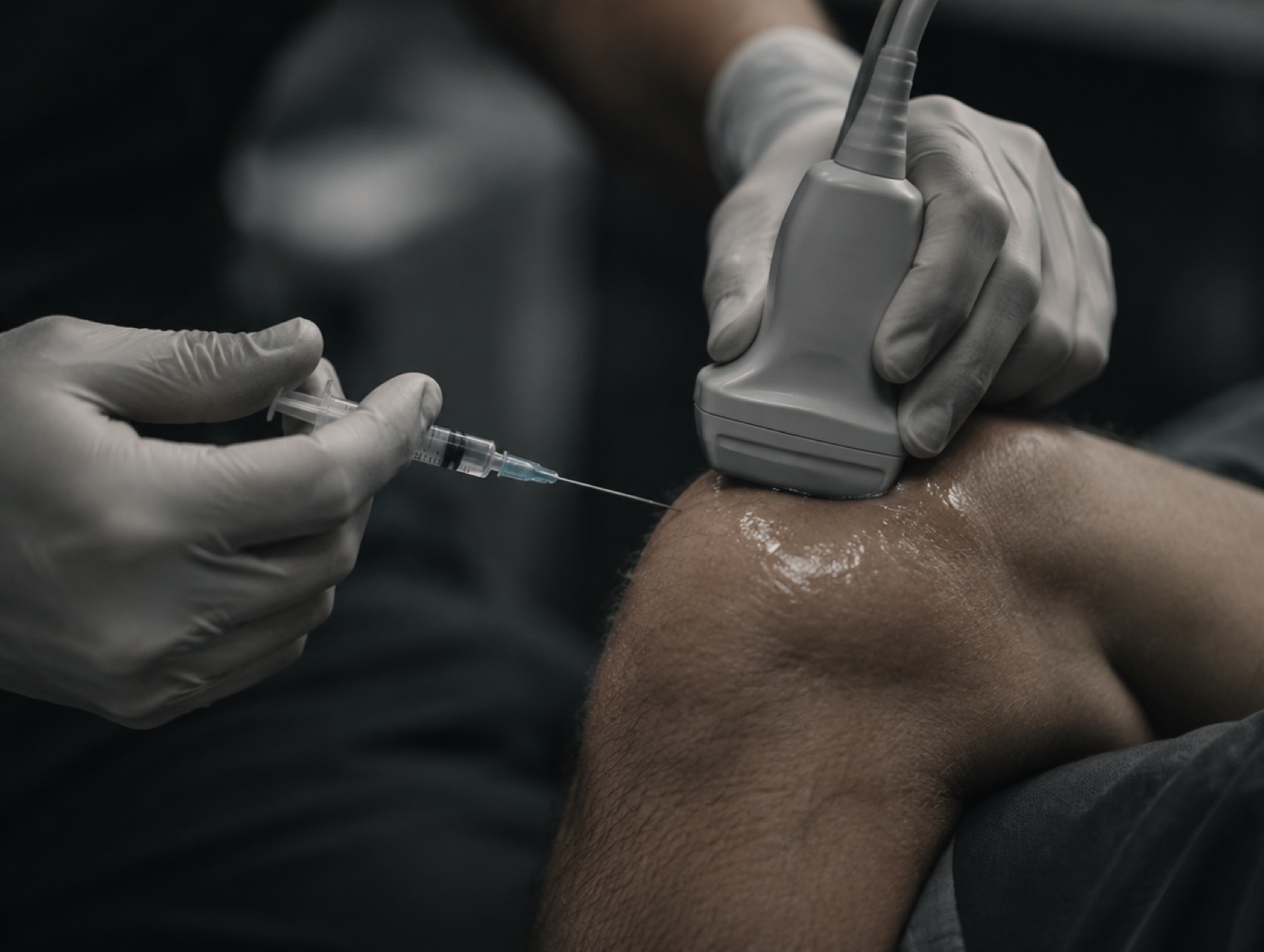 45 minJoint InjectionsA joint injection places medication directly into a painful joint, either a corticosteroid to reduce inflamma…Read more →
 45–60 minPRP TherapyPRP therapy concentrates the platelets from a sample of your own blood and injects them into an injured tendo…Read more →
 Trigger Point InjectionA trigger point injection treats a knot in a muscle, a tight band that will not release and that often refers…Read more →
 15–45 minNerve BlockA nerve block is an injection of local anesthetic, often with a steroid, placed next to a specific nerve or c…Read more →
Questions
Rotator Cuff Injuries, answered.
Does a rotator cuff tear always need surgery?
No. Tendinopathy and most partial thickness tears do well with a proper rehabilitation program, sometimes helped by an injection that makes the exercises tolerable. Full thickness tears are different. In a younger active patient a full thickness tear is a surgical discussion, because the torn tendon will not reattach on its own and can pull back over time. In an older patient with lower demands, many full tears are managed without surgery and function well.
Why does it only hurt at night?
Lying on the shoulder compresses the tendon and the bursa, and lying flat removes the small amount of traction gravity gives the joint during the day. There is also nothing to distract you. Night pain that makes you roll off that side is one of the most specific signs of a rotator cuff problem and it is worth mentioning directly rather than treating as a sleep complaint.
How long does rotator cuff pain take to settle?
Tendinopathy usually needs three months or more of consistent work, because tendon remodels slowly. People often stop at six weeks when the pain eases, and the problem returns. Stiffness on top of it adds time. If nothing has changed after three honest months of therapy, the diagnosis is worth revisiting rather than repeating the same program.
Will a cortisone injection make a tear worse?
Placed into the subacromial space rather than into the tendon itself, a steroid injection has a reasonable safety record and can break the pain cycle enough to let rehabilitation start. Repeated injections around a degenerated tendon are a different matter and can weaken it. If surgery is likely within a few months, most surgeons prefer you not have a steroid injection immediately beforehand, so the timing gets coordinated.
Is it my shoulder or my neck?
Both refer pain to the same outer arm area. Neck problems tend to send pain past the elbow, produce numbness or tingling in the hand, and change with neck position. Shoulder problems hurt with specific arm movements and when lying on that side. When it is genuinely unclear, nerve conduction testing and a diagnostic injection settle it, and treating the wrong one wastes months.
Get a real diagnosis for rotator cuff.
Three New Jersey offices, most insurance accepted, and a real opening on the calendar.