
Treatment
Intrathecal Pain Pumps
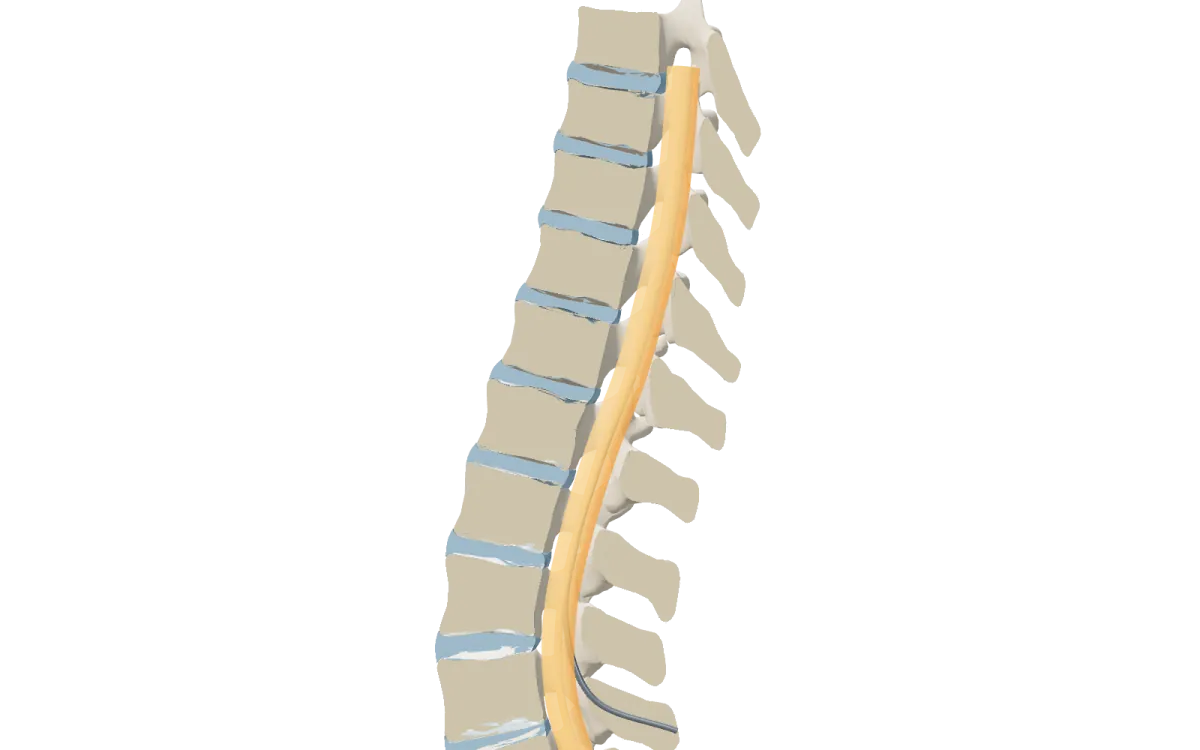
An intrathecal pump is a small device implanted under the skin of the abdomen that delivers pain medication through a thin catheter directly into the fluid around the spinal cord.
- Visit length
- Under an hour
- Setting
- In the office
- Performed by
- Dr. Ednan Sheikh
- Offices
- Clifton, Jersey City, Edison
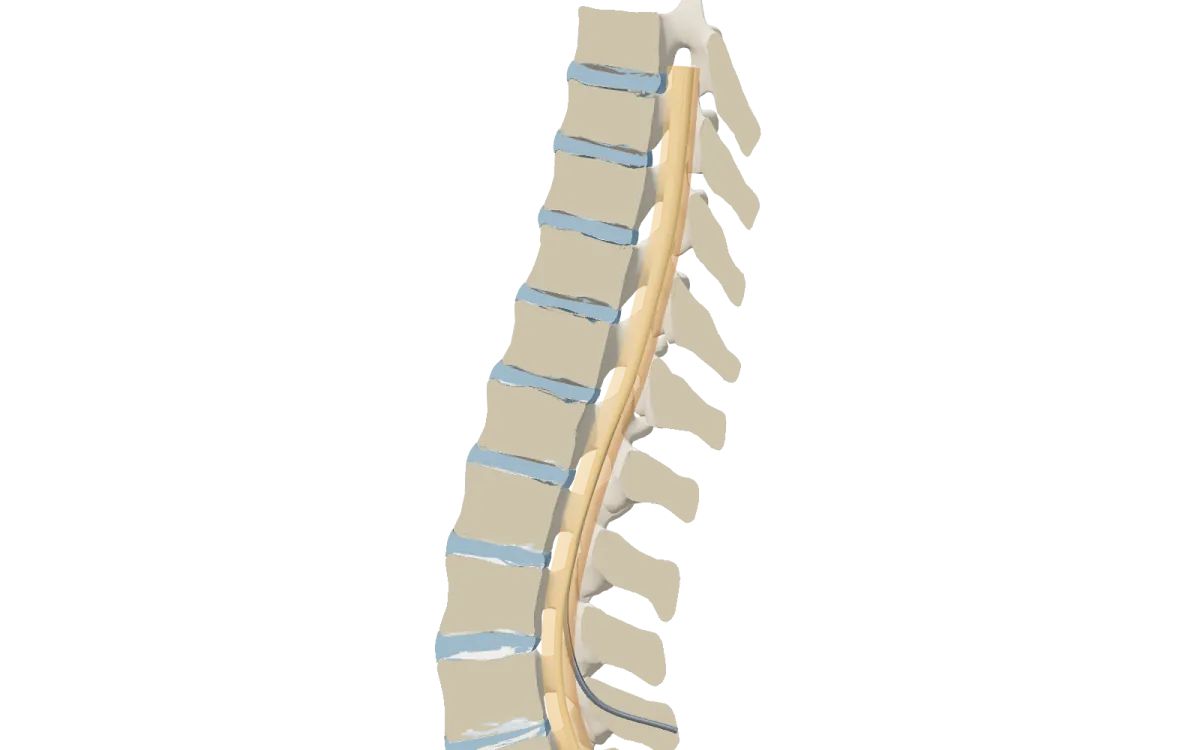 Catheter tipFluid around the cord

In short
What pain pump does.
Intrathecal Pain Pumps
An intrathecal pump is a small device implanted under the skin of the abdomen that delivers pain medication through a thin catheter directly into the fluid around the spinal cord. Because the medication reaches the spinal pain receptors without passing through the bloodstream, the dose needed is roughly one three hundredth of the equivalent oral dose, which means far less sedation, constipation and mental fog. It is reserved for severe chronic pain or cancer pain that has not been controlled by other treatments, or for people who cannot tolerate the side effects of oral medication.
The trial takes under an hour. The implant surgery takes one to two hours and is same day. Refills take about fifteen minutes.
Who it helps
Is this the right procedure for you?
It is worth asking about if any of these describe where you are now.
- Severe cancer pain, particularly where oral medication causes unacceptable sedation
- Chronic pain after failed spine surgery that has not responded to other treatments
- Complex regional pain syndrome and severe nerve pain
- Severe spasticity from multiple sclerosis, cerebral palsy or spinal cord injury, treated with baclofen
- People whose pain is controlled by oral opioids only at doses that leave them sedated, constipated or unable to think clearly
- People who want to reduce or stop oral opioid use while keeping their pain controlled
Conditions
What it is used for.
 Low Back PainLow back pain is pain in the area between the bottom of your ribs and the top of your hips.Read more →
 Neck PainNeck pain is pain in the cervical spine, the seven vertebrae between your skull and your shoulders.Read more →
 SciaticaSciatica is pain that travels from the low back or buttock down the back of the leg, following the sciatic ne…Read more →
 Peripheral NeuropathyPeripheral neuropathy is damage to the nerves outside the brain and spinal cord, most often the long nerves t…Read more →
The procedure
What actually happens, start to finish.
No surprises on the day. This is the whole thing, in order.
- 01
Evaluation and candidacy
Dr. Sheikh reviews your pain history, prior treatments, current medications and imaging. A psychological evaluation is part of the process and is usually required by insurance. Active infection, bleeding problems and untreated addiction have to be addressed before proceeding.
- 02
The trial
A test dose is given, either as a single injection into the spinal fluid or through a temporary catheter over a day or two. The point is to see whether spinal delivery controls your pain and what side effects you have at that dose.
- 03
Judging the trial
A successful trial means at least fifty percent pain reduction along with tolerable side effects and improved function. If the trial does not reach that bar, no pump is implanted.
- 04
Implant surgery
In a one to two hour outpatient operation under sedation or general anesthesia, a catheter is placed into the intrathecal space through a needle, anchored, and tunneled under the skin around to the abdomen. The pump, about the size of a hockey puck, is placed in a pocket under the skin and connected.
- 05
Programming and titration
The pump is programmed wirelessly with a starting dose. Over the following weeks the dose is adjusted in small steps at office visits until your pain is controlled without excessive sedation. Titration takes patience and several visits.
- 06
Weaning oral medication
As the pump dose rises, oral opioids are reduced on a planned schedule. Stopping them abruptly causes withdrawal, so this is done gradually and with clear written instructions.
- 07
Refills
The reservoir is refilled in the office every one to six months depending on your dose and pump size. A needle goes through the skin into the refill port, which takes about fifteen minutes and feels like a blood draw. Missing a refill causes withdrawal and is not something to let slide.
- 08
Long term management
The pump battery lasts roughly five to seven years and is replaced in a short outpatient procedure. Doses are adjusted over time, and the whole system can be removed if it is no longer needed.
After
Recovery, and the risks worth knowing.
Recovery
- After the implant, expect soreness at the abdominal pump pocket and the back incision for one to two weeks. The pocket is usually the sorest part.
- No lifting over ten pounds, no twisting and no reaching overhead for six weeks while the catheter scars into place.
- Keep both incisions dry for the first week, then follow your wound care instructions. No baths, pools or hot tubs for four weeks.
- Expect several office visits in the first two months for dose adjustment. Your pain is not fully controlled on day one.
- Never miss a refill appointment. Running the reservoir empty causes withdrawal, and with baclofen it can be dangerous.
- Carry your device card and tell every physician, dentist and radiology department that you have an implanted pump.
Risks
Every procedure carries risk. These are the ones worth knowing about, and Dr. Sheikh goes through them with you before you consent to anything.
- Infection at the pocket or along the catheter, which can require removing the entire system
- Catheter problems, including kinking, disconnection, migration or a tip granuloma, a mass at the catheter tip that can compress the spinal cord
- Spinal fluid leak causing severe headache after implant
- Respiratory depression, most likely in the first 24 hours after implant or after a dose increase, which is why monitoring is strict during those windows
- Withdrawal if the pump fails, the reservoir empties or a refill is missed, which with baclofen can be a medical emergency
- Hormonal changes, swelling in the legs, and the need for repeat surgery to replace the battery every five to seven years
Questions
Pain Pump, answered.
How is a pain pump different from taking pills?
The medication goes straight into the fluid around your spinal cord instead of through your stomach and bloodstream. That means roughly one three hundredth of the oral morphine dose achieves the same relief, with far less sedation, constipation and mental fog.
Do I have to have surgery to find out if it works?
No. A trial dose is given first, either as a single spinal injection or through a temporary catheter. If it does not give at least fifty percent relief with tolerable side effects, no pump is implanted.
How often do I need refills?
Every one to six months depending on your dose and pump size. The appointment takes about fifteen minutes. Missing one is not an option, because an empty reservoir causes withdrawal.
Can the pump be removed?
Yes. The system is reversible. It can be removed if the therapy is no longer needed, if there is an infection or device problem, or if you decide you no longer want it.
Will I still need oral pain medication?
Usually much less, and many people come off oral opioids entirely. The weaning is done gradually as the pump dose is adjusted upward, on a written schedule.
Is an intrathecal pump covered by insurance?
Yes, by most plans including Medicare, when documentation shows other treatments have failed and the trial was successful. Our office handles the prior authorization for the trial, the implant and the ongoing refills.
Can I go through airport security or get an MRI?
Yes to both, with precautions. Show your device card at security rather than walking through the scanner unannounced. Most pumps are MRI conditional, and the radiology team needs to know beforehand so the pump can be checked afterward.
Related
Other procedures.
 15–45 minNerve BlockA nerve block is an injection of local anesthetic, often with a steroid, placed next to a specific nerve or c…Read more →
 30–45 minSpinal Cord StimulationSpinal cord stimulation uses mild electrical pulses delivered through thin wires placed near the spinal cord…Read more →
 15–20 minChemical NeurolysisChemical neurolysis uses a chemical agent, such as Botox, phenol or alcohol, to stop a nerve from transmittin…Read more →
 20–45 minSympathetic Nerve BlocksA sympathetic nerve block targets the sympathetic nervous system, the automatic network that controls blood f…Read more →
Ask whether pain pump is right for you.
Three New Jersey offices, most insurance accepted, and a real opening on the calendar.